


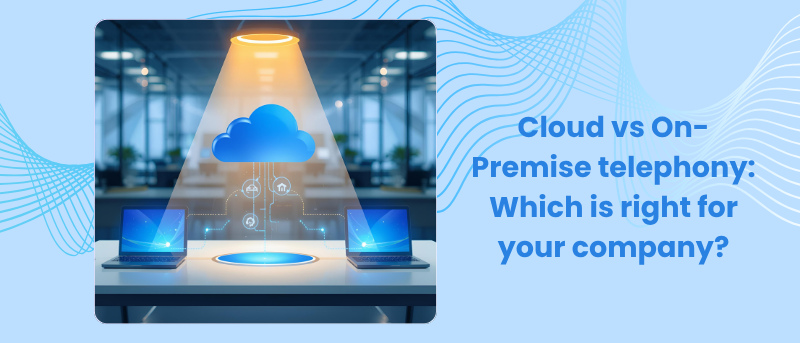
PBX vs. Cloud Telephony: Which Phone System is Right for Your Multi-Site Business?
Choosing the right phone system for any business is vital. This connects teams, provides links to suppliers, and offers a way for customers to get in touch.
The most common set-ups that companies choose between are PBX and Cloud Telephony. At Touch Blue, we help businesses to understand the differences between these solutions. We believe that off-the-shelf set-ups simply don’t work for every company. Instead, we offer tailored solutions that work for each individual organisation.
Keep reading to understand what phone system is right for your multi-site business.
What Is an On-Premise PBX System?
PBX stands for private branch exchange. This is a system that is installed and managed on-site at business premises. As the system is physical, it relies on servers, handsets, and network equipment to keep things in full working order.
A PBX works by directing calls through traditional phone lines and SIPs. When using a PBX for multiple sites, different set-ups are required for each physical site.
Companies that opt for this system configuration often choose it as it is highly secure, aligns with traditional disaster recovery planning, and allows a greater level of control.
What Is Cloud / Hosted Telephony?
The alternative to a PBX is opting for a cloud-hosted system. This service is hosted and managed through an internet connection via a third-party company.
This is often the preferred choice for multi-site organisations as all data and operations are managed through one central system. It’s also easier for companies to scale activities, manage maintenance, and pass calls through to different sites when using a cloud-hosted set-up.
How Do PBX vs. Cloud Telephony Compare?
Cost of PBX vs Cloud Telephony
PBX configurations require more physical equipment, meaning costs are higher upfront. However, costs can still add up when using a cloud system as most of the time subscription prices need to be factored in.
Our advice is to consider long-term and short-term costs in line with your cash flow to see what options are best for your bank balance.
Control of PBX vs Cloud Telephony
As PBX systems are physically onsite, they need to be managed by a technology expert. For companies with in-house expertise, this is ideal. However, if you don’t have the skills onsite or you simply don’t want this responsibility, outsourcing to a cloud-hosted provider is a good idea.
Scalability of PBX vs Cloud Telephony
For companies that plan on scaling operations, a cloud system is most effective. Users and accounts can be easily added via the central hub. This eliminates the need to pay for additional equipment and also allows companies to operate reactively.
Maintenance of PBX vs Cloud Telephony
For PBX users, hardware needs to be regularly maintained to ensure it remains in full working order. Any damage or faults also require a technician to be onsite to fix the problem.
Cloud phone systems include regular automated maintenance and management by the hosts themselves.
Reliability of These Phone Systems
Both options are reliable. However, they can also run into problems.
For PBX systems, hardware damage or faults can mean phone systems are out of action. Alternatively, cloud software relies on a good internet connection. If this is interrupted, calls may be temporarily impacted.
When PBX Still Makes Sense
PBX systems are still a popular choice for organisations that:
- Have very strict security protocols and compliance standards.
- Require extensive customisation and changes to configurations on a regular basis.
- Prioritise ownership of their systems.
- Operate in locations with unreliable internet connections, such as rural spots.
Why Multi-Site Businesses Are Migrating to the Cloud
The main reason why companies with multiple sites are choosing cloud configurations is flexibility.
Cloud systems allow for:
- Quick set-ups of new sites, employees, and networks
- Hands-off management of networks
- Rapid scaling of operations
- Resilience with disaster recovery planning
- Consistent experiences for everyone from staff to customers
The main benefit is that cloud systems remove barriers for multi-site organisations. If you plan on operating in different locations, communication is key.
What to Look for in a Migration Partner
Many businesses delay migrating to cloud-based systems as they worry about the process being difficult. That’s not the case when you choose the right partner.
When choosing a migration partner, you should look for a proven track record, understand what cloud systems they prefer, and seek someone who offers excellent support.
At Touch Blue, we tick all of these boxes thanks to our 35+ years of experiences across multiple sectors. Our company-employed engineers also offer 24/7, 365 support to ensure teams are kept operational at all times.
To learn more about our nationwide coverage for multi-site rollouts, please get in touch, or contact us today via the form below.